Cheese waxing machines

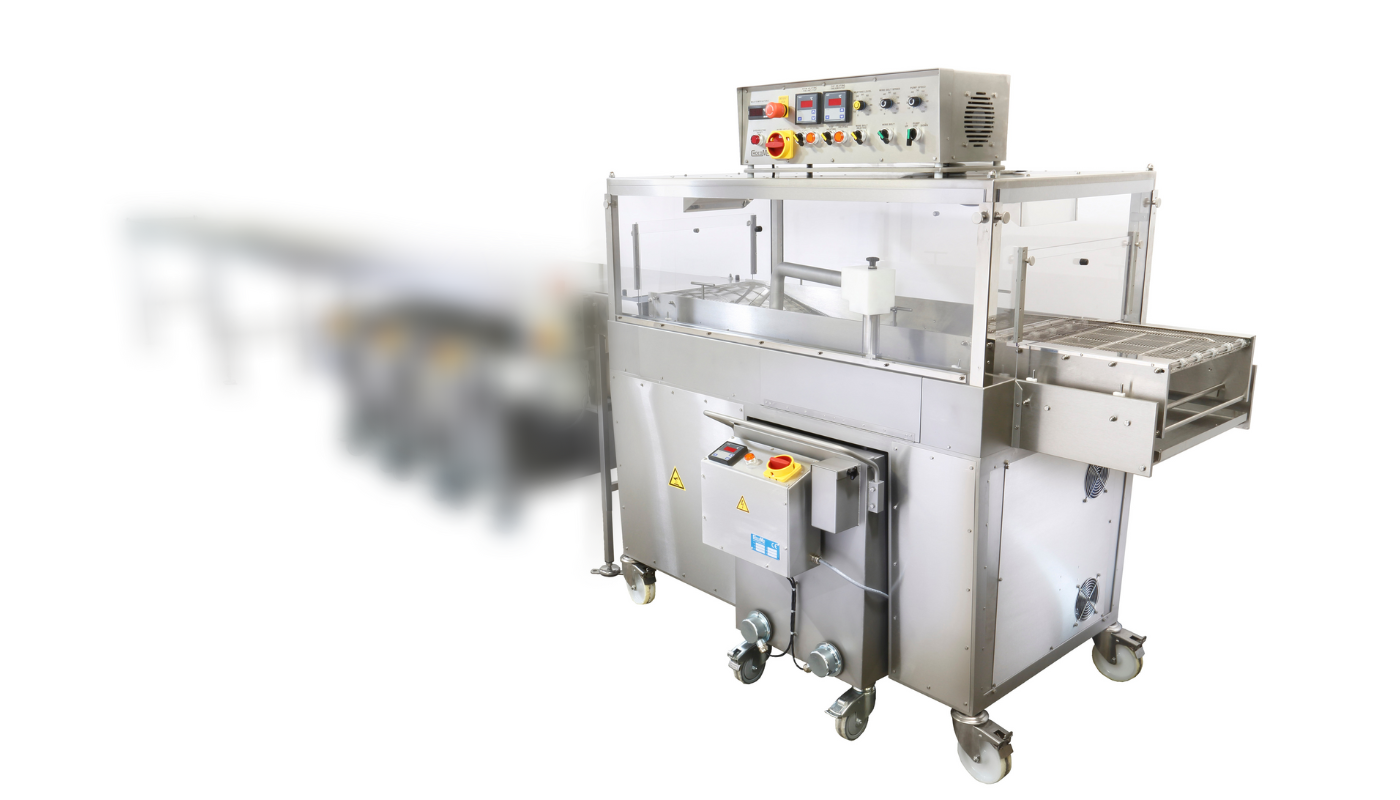
Pro-Wax cheese waxing machines provide a semi-automatic solution for coating cheeses with wax in dairies where cheeses are currently processed manually.

Many users of a Pro-Wax machine have previously waxed cheeses by hand, where the repeated, uniform movements of dipping the cheeses in wax become labour-intensive. Others have applied plastic coating, which also requires several coating layers and significant manual handling.


Key benefits

  • Reduced labour cost for the waxing operation – typically only two operators required

  • Increased output of waxed cheeses due to the semi-automatic concept

  • Consistent visual appearance and wax thickness through accurate process control


Still waxing cheese manually?

Many dairies wax cheeses by hand before investing in a cheese waxing machine. This process is often labour-intensive, as cheeses must be dipped repeatedly in hot wax and the repeated, uniform movements can become a strain on the staff.

Other dairies apply plastic coating, which also requires several coating layers and considerable manual handling.

A Pro-Wax cheese waxing machine provides a semi-automatic solution that increases output and ensures a consistent wax coating.

Why wax cheese


Wax coating has been used for many years as a way to protect cheese during maturation and storage while also giving the product a distinctive appearance.

Cheese waxing is often chosen because it:

  • creates an attractive appearance on the supermarket shelf

  • gives the cheese a more exclusive and distinctive look compared to vacuum-packed cheeses

  • supports a controlled maturation process

  • extends the shelf life of the cheese

  • can function as the final packaging of the product

For many cheese producers, waxing is therefore both a practical solution and a way to give the cheese special attention and visual identity.

The Pro-Wax Cheese Waxing Line

The Pro-Wax cheese waxing line consists of a waxing machine combined with wax tanks and a take-off solution, allowing cheeses to be coated with wax in a controlled and efficient process.

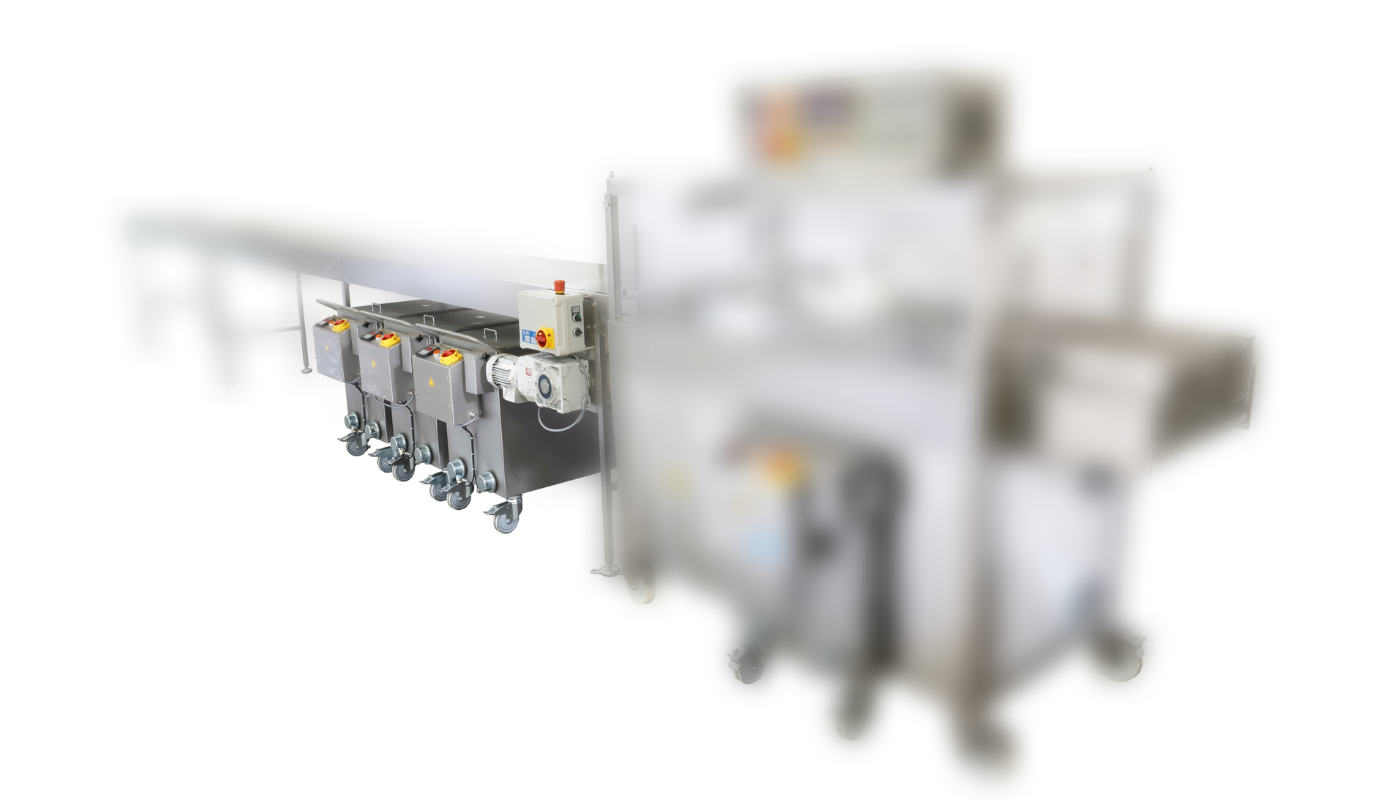
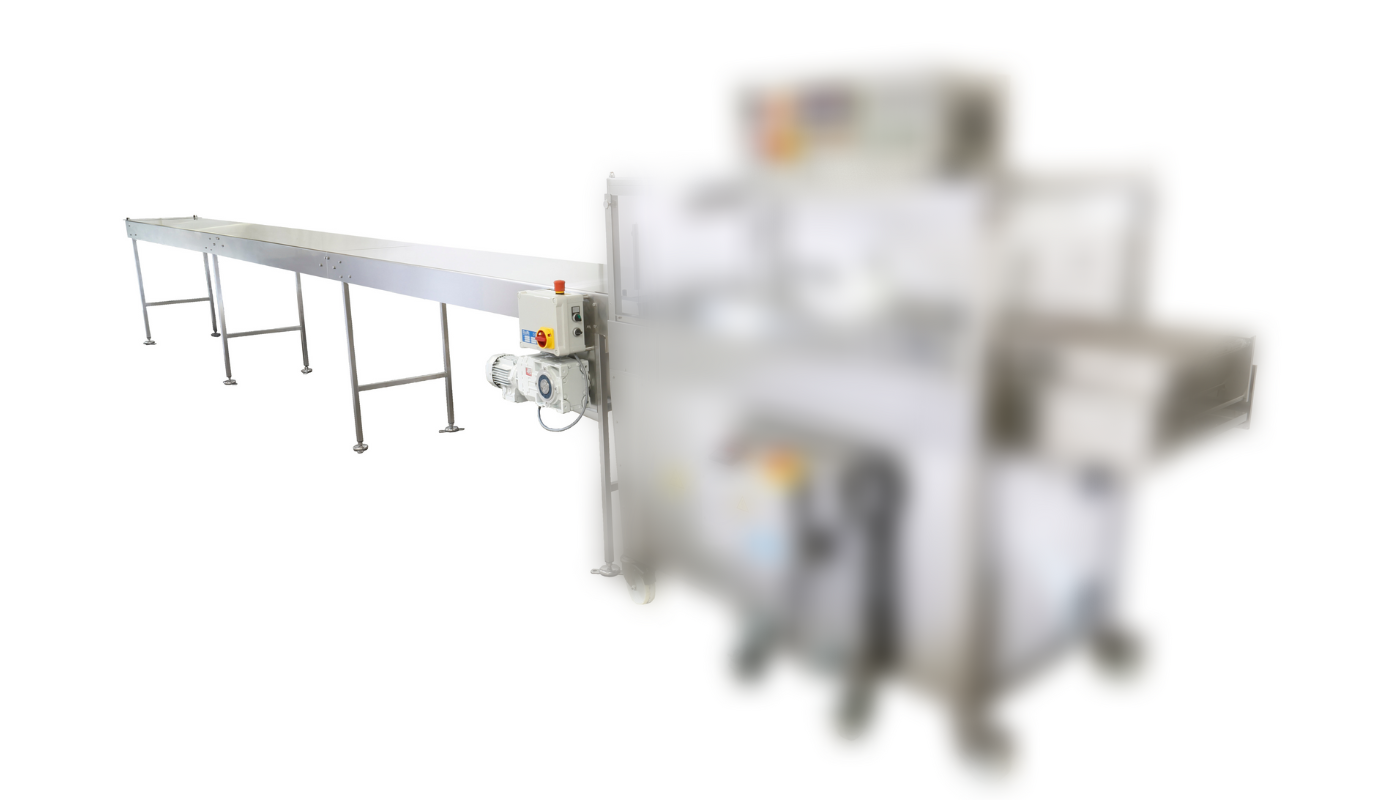
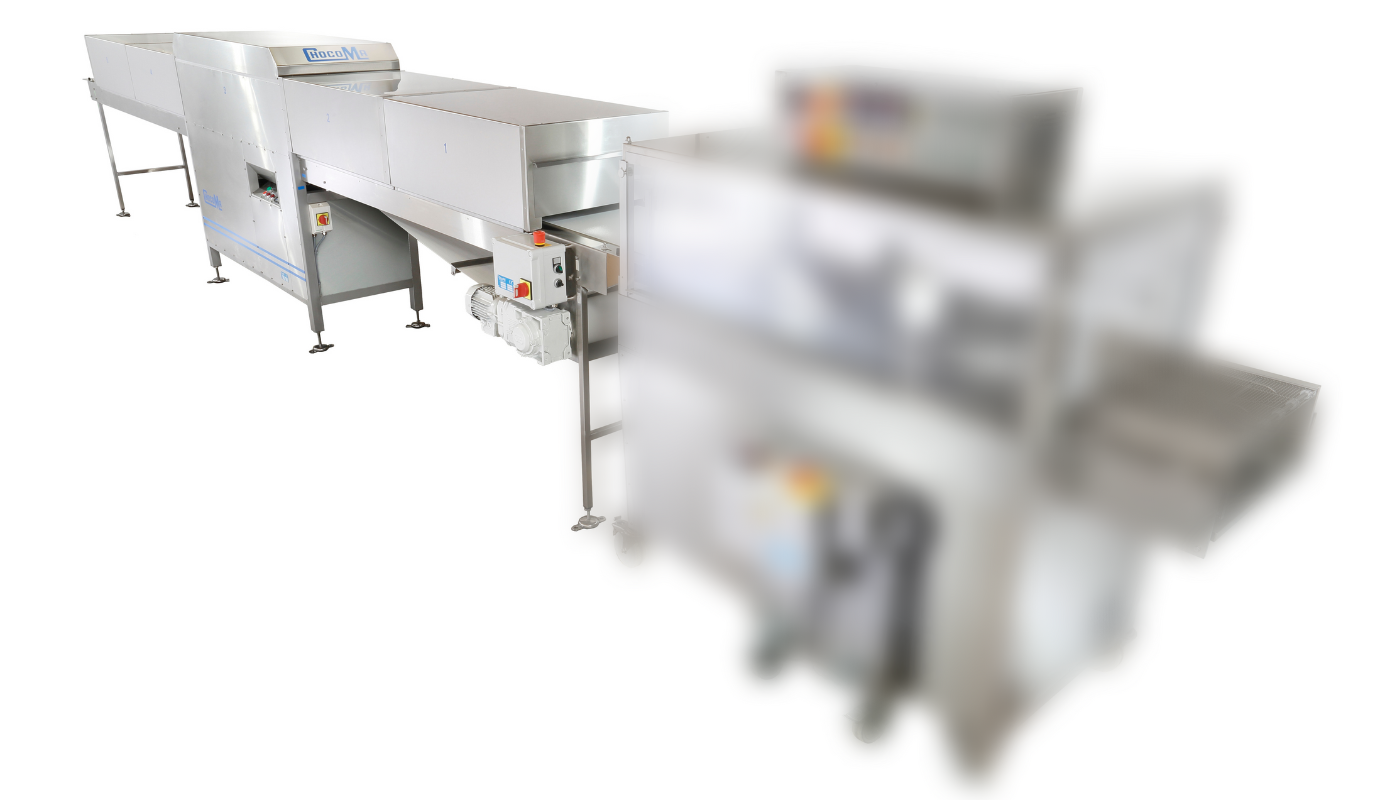
Apart from the waxing machine, at least one wax tank and a take-off table will be needed – alternatively a cooling tunnel depending on the production setup.

Below is an overview of the available components.

Small cheese waxing machine

Item number: 2MP32WAX

Belt width (mm): 320
Maximum diameter of cheese (mm): 270
Material: 
Stainless steel and aluminum
Stainless steel
Dimension excluding take-off table: L x W x H (mm) 1.750 x 860 x 1.520
Belt speed (meter / minute): Variable between 3,0 – 10,0
Power supply:  1 phase 200-240 VAC – 3 phase 400VAC – 50/60 Hz
Energy consumption:  3,2 kW – maximum, when all heating is turned on

Large cheese waxing machine

Item number: 2MP40WAX

Belt width (mm): 400
Maximum diameter of cheese (mm): 350
Material: 
Stainless steel and aluminum
Stainless steel
Dimension excluding take-off table: L x W x H (mm) 1.750 x 940 x 1.520
Belt speed (meter / minute): Variable between 3,0 – 10,0
Power supply:  1 phase 200-240 VAC – 3 phase 400VAC – 50/60 Hz
Energy consumption:  3,2 kW – maximum, when all heating is turned on

Cheese waxing tanks

Small cheese waxing tank

Item number: 2MP32WAXTANK

Material: Stainless steel
Dimension: L x W x H (mm) 800 x 490 x 730
Volume (liter): 80
Power supply: 1 phase 200-240 VAC – 50/60 Hz
Energy consumption: 2,4 kW – maximum, when all heating is turned on

Large cheese waxing tank

Item number: 2MP40WAXTANK

Material: Stainless steel
Dimension: L x W x H (mm) 880 x 490 x 730
Volume (liter): 90
Power supply: 1 phase 200-240 VAC – 50/60 Hz
Energy consumption: 2,4 kW – maximum, when all heating is turned on

Cheese waxing take-off table

Cheese waxing take-off table

Item number: 2MP32WAXTABLE 

Material: Stainless steel
Dimension: L x W x H (mm)
5.000 x 536 x 1.000
6.600 x 536 x 1.000
Power supply: 1 phase 200-240 VAC – 50/60 Hz
Energy consumption: 0,2 kW

Cheese waxing cooling tunnel

Instead of a waxing take-off table, we can also deliver a cooling tunnel. Don’t hesitate to contact us for more information.

Production capacity

The production capacity of the Pro-Wax cheese waxing machine depends on the size and weight of the cheeses being processed.

In theory the capacity is determined by how many cheeses can be placed on the infeed grill. However, placing too many cheeses at once will eventually cool the wax.

Typical production examples include:

  • approx. 45 cheeses of 0.2 kg per minute

  • approx. 5–6 large cheeses above 10 kg per minute

Many other combinations of cheese size and weight are possible depending on the production setup.


Wax coverage in a single pass

Whether cheeses can be fully coated in a single pass depends on the cheese type, shape, dimensions and weight. The final result is typically determined through testing under the actual production conditions. 

In general:

  • cheeses with rounded edges are usually fully coated in one pass

  • cheeses with sharp edges from cutting or extrusion may require a second pass

  • lower wax temperatures produce a thicker wax layer

The maximum cheese height for complete coating in a single pass is 110 mm. Cheeses higher than this will normally require a double pass through the waxing machine.

As a rule of thumb, smaller cheeses up to approx. 1 kg with rounded edges can often be coated in one pass, although there are many variations. Larger cheeses of 12–15 kg can in some cases also be waxed in a single pass.

Wheels or half wheels up to 5 kg (approx. 300 mm diameter × 150 mm height) can also be wax coated, typically by means of double coating.

However, Pro-Wax cannot guarantee a completely smooth and uniform appearance for larger cheeses that require a double pass.


Cheese and wax requirements

For optimal waxing results the cheese should meet the following conditions:

  • The cheese must be dry when presented to the machine

  • The cheese should preferably be cut rather than extruded

  • If extruded, the cheese must be fully relaxed

  • The cheese should have a core temperature between 2–5°C

  • The cheese must have a reasonably flat bottom

  • The cheese should not crumble during handling

Because of the wide variety of cheeses and wax types available, the optimal waxing process is typically determined through testing.

The wax used must be a dedicated cheese wax. Various national and international suppliers produce wax suitable for cheese waxing.

An example of a commonly used wax specification for cheddar cheeses in the size range 0.25–2.5 kg is:

  • Congealing point: 60–66°C (ASTM D 938)

  • Penetration at 25°C: 55–65 (ASTM D 1321)

  • Viscosity at 100°C: 8–13 mPa·s (ASTM D 3236)

  • Colour: Black (pigment E151)


FAQ – Pro-Wax Cheese Waxing Machines

What is the principle of operation of the waxing machine?

In essence the waxing machine works with separate heated wax containers that slot into the machine. Each container can hold a different wax colour.

This makes it possible to use different wax colours without cleaning down the entire machine each time a colour change is required. In addition, separate grill sections and pumps are available to support the waxing process.

How do we operate with several colours of wax?

The waxing machine uses separate heated wax containers, each containing a different wax colour. By using separate containers, colour changes can be carried out without cleaning the entire machine between productions.

Separate grill sections and pumps are available to further support efficient operation when working with different wax colours.

Can a cheese waxing test be arranged with our cheeses?

Yes. A waxing test can be arranged using your cheeses in order to determine the optimal waxing parameters and coating result under the actual production conditions. Contact us to arrange a cheese waxing test and read more about it here.

What kind of cheeses can be waxed?

Semi-hard and hard cheeses such as Cheddar, Gouda and Havarti are typically suitable for waxing. Other cheeses may also be waxed depending on their shape, structure and surface condition.

What type of wax should be used for cheese waxing?

The wax used must be a dedicated cheese wax. Various national and international suppliers produce wax suitable for cheese waxing, and several types have proven suitable for use in Pro-Wax waxing machines.

Find the right cheese waxing solution

We are happy to help you evaluate the best Pro-Wax solution for your production.

Contact us to discuss your application or arrange a cheese waxing test with your own cheeses.


    + 30 years of experience
    - sealed into occasional emails.

    Occasional emails. No spam. Just insights, inspiration, and +30 years of cheese waxing machinery know-how.

    We don’t spam! Read our privacy policy for more info.